A philosophical essay by the sweet Tikami
Free Rider, Hummingbird, and Sprite
I repeatedly come across, among your fellow humans, attitudes that are very logical and beneficial on a personal level, yet illogical and harmful on a societal one.
- Since the State heavily subsidizes public transport, and countless passengers fill it every day, why pay for a ticket? Better to dodge the fare: with one passenger more or fewer, the bus, subway, or train will leave anyway.
- Since the majority of the population is vaccinated, thereby preventing the spread of the corresponding diseases, why take even the slightest risk of an allergic reaction by getting immunized too? Better to enjoy the herd-immunity shield, and spend one’s time and money more usefully elsewhere.
- Since, when a group heads off for a weekend in the countryside, there are always cars one can hitch a ride in, why offer one’s own, or even chip in for carpooling costs? Since those drivers will spend the same amount on gas, tolls, and upkeep anyway, it’s all upside for them to enjoy such pleasant company.
I see two main springs behind such attitudes in these people. First, the impression of being special individuals, deserving of favorable treatment. Second, the feeling that their actions, diluted within the vast fresco of human History, have a nonexistent impact.
What strange illusions these are. Within the immense snow that is your humanity, each snowflake likes to believe itself more unique than the others. And yet, what is that snow, if not an accumulation of flakes, each tiny, yet none negligible?
When their profitability drops, public transport lines get scaled back or shut down. When vaccination coverage in a population is insufficient, medieval diseases make their comeback. When, weary of expensively maintaining a car that mostly serves other people, city dwellers sell it and start looking, in turn, for rides of their own, the logistics of countryside weekends lose a great deal of their simplicity.
One can sense it clearly: a paradisiacal beach is nothing but an accumulation of tiny grains of sand and drops of water, all at just the right temperature; likewise, a country that works is nothing but a myriad of ordinary citizens who each look beyond the end of their own nose, and act accordingly. People who, instead of following the Way of the Free Rider, the Philosophy of the Parasite, ask themselves, “what would happen if everyone acted the way I do?”
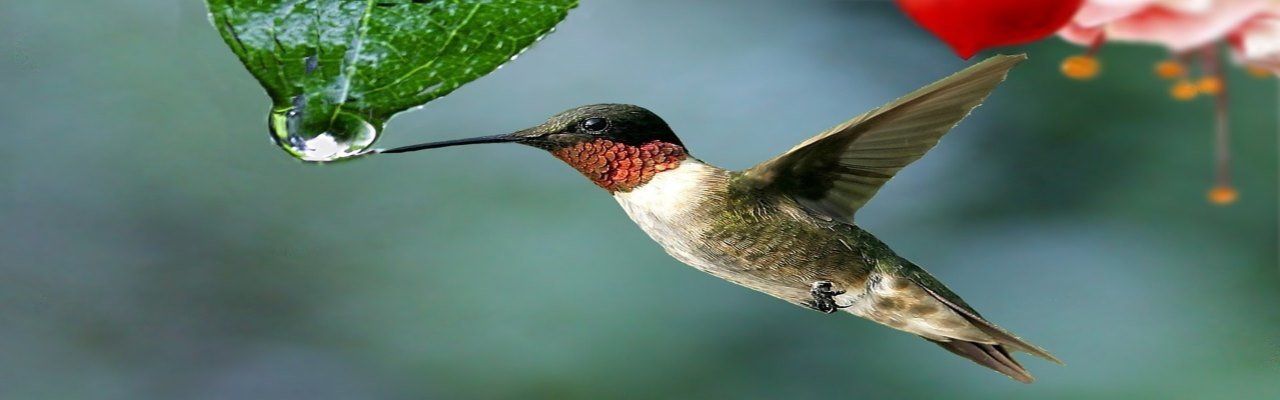
This strongly reminds me of the story of the Valiant Hummingbird, who, in the middle of a forest fire, carried beakfuls of water to the blaze. The forest animals - the bears, the wolves, the elk - running about in every direction, shouted at him: “Why are you exhausting yourself with these vain and dangerous round trips? Your little droplets can never be enough to stop this fire.” And the hummingbird replied: “That is quite true, but I am doing my part.”
Some humans, realizing that it was problematic to live at others’ expense, yet not being especially selfless either, have drifted toward a more refined philosophy. We Tikami call it the Sprite’s Grandiloquence.
Legend has it that an enterprising goblin decided one day to go sell, together with his friend the sprite, their harvest of blackberries in the neighboring land. The sprite gave him notice: “I am quite busy these days, so I would be grateful if you found us a means of transportation for this trip. You have free rein, and of course, we will share the costs.” The goblin bought sturdy materials from the mountain blacksmiths, drew up the plans for the carriage, built it in his workshop, then tamed two rabbits to serve as a team. When the day came, he proudly showed off his creation to the sprite. The sprite replied: “Splendid work, dear friend, and as I promised you, we will share the costs: since you took care of the durable goods, I will take care of the consumables.” Whereupon he tossed the goblin a bunch of carrots.
So it also goes with humans. A mechanic friend of mine explained to me that owning a car swallows up thousands of your little metal coins every year: “You understand, between depreciation, insurance, maintenance, parking, and consumables, it’s a financial ruin.” I therefore have a harder time understanding the ordinary folk who feel like Generous Patrons because they chipped in for gas during a carpool; who, disregarding the real cost of the country house that was lent to them (“there’s the mortgage payments, the property taxes, the repairs, the water and electricity bills”), believe they have “returned the favor” by treating everyone to dinner at a restaurant; or who, when hiring a service provider, expect to pay only for the time spent on the task, not for the years it took to forge that expertise.
Of course, none of this excludes the notion of a “gift”. It is pleasant that your societies still have room for acts of pure generosity, expecting no direct or indirect return; and I tip my hat to the good people who give rides, lend their homes, and help their neighbors, entirely as volunteers. But it is also preferable, in such cases, that the beneficiaries show a touch of gratitude, even if they did chip in for the extra costs incurred.
As you can tell, this is nothing less than a demand of justice, one that calls for a relevant individual contribution to collective efforts. A demand that requires good will, but also education; including a certain awareness of the massive impact that individual micro-actions have on the world. And this awareness strikes me as particularly necessary in a society that aspires to democracy, civic-mindedness, and ecology - causes that call for far more courageous hummingbirds than crafty sprites.
Revision history
- 2017/03/24: Clarifications on the notion of “gift”
 A glimpse of the author, the Tikami