A philosophical essay by the sweet Tikami
The Forest of Freedoms
“Liberty can only be restricted for the sake of liberty itself.”
—John Rawls
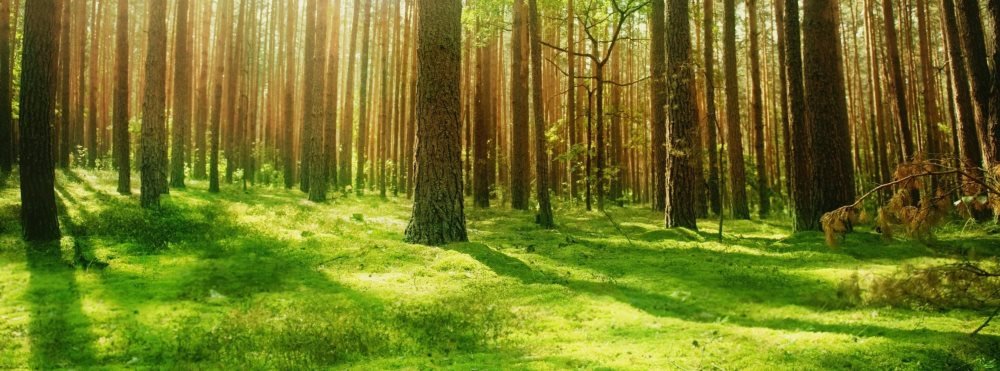
No doubt you have heard of the Tree of Liberty. A sapling that has occasionally been planted in towns and villages since the time of the French Revolution, and which also represents life, continuity, growth, strength, and power. This symbol is quite interesting, but only if one takes it further: Liberty does not behave like a single tree, but like a forest; the forest of freedoms.
- A Bit of Vocabulary
- Liberty, a pompous term if ever there was one, will here simply be understood as the sum of individual freedoms. The terms “rights” and “freedoms” will be used interchangeably, as I have been unable to find any interesting semantic distinction between them. Lastly, “branches” and “roots” will be treated as equivalent, since these two components are in fact deeply symmetrical, acting as sensors (aerial and underground, respectively) for nutrients and energies (thermal/gaseous/liquid/solid…).
A Study of the Forest of Freedoms
In this flora, each tree represents a being. The trunk is the image of its fundamental freedoms: the right to life, the right to respect for physical and psychological integrity. From it spring the branches (and roots), which represent so many individual rights in their exercise: freedom of movement, freedom of expression, the right to a fair trial, the right to vote, the right to education, the right to non-discrimination…
What important lessons should we draw from this metaphor of the forest of freedoms?
That these freedoms, like their plant-world representations, are:
- dynamic: as societies, cultures, and sciences evolve, freedoms evolve along with them; some appear, others change in scope, others disappear. Thus, if humankind were to gain tomorrow the ability to transmit thoughts at a distance, this would immediately entail rights and duties in the use of that power, both to facilitate exchange and empathy between individuals, and to prevent “telepathic harassment”.
- hierarchical: some freedoms are fundamental, others merely accessory; and, just as small branches are supported by larger ones, they are bound together by relationships of dependency: if you remove the right to life, it hardly matters whether you claim to preserve the other freedoms… [1]
- internally conflicting: just as two different branches cannot simultaneously occupy the same space, one cannot enjoy every possible freedom at once; the freedom to eat whatever one desires thus clashes with that of being healthy, and certain freedoms can only be exercised within the framework of a “personal commitment” that restricts other freedoms accordingly (e.g. becoming an Olympic competitor).
- externally conflicting: what we call duty, the inevitable counterpart of every freedom, is nothing other than the act of respecting the freedoms of others. Thus, the right to ride a bicycle is limited by the duty not to encroach on sidewalks, a duty that is nothing more than respect for other people’s right to walk about peacefully.
- all the more dangerous the more secondary they are (and thus the closer they come to brushing up against other people’s freedoms). Indeed, except in a few twisted movie-plot scenarios, one person’s right to life is not supposed to conflict with anyone else’s freedoms; but the higher one climbs among the freedoms, the more debatable they become: the right to bear arms (see the crime statistics in the USA), the right to strike (for every surgeon at once?), the right to demonstrate (which always carries a risk of serious escalation)… The same thing happens with trees: it is rarely the trunk that damages its surroundings, but rather the roots, which creep far afield, crack open city pavements, and choke out other plants.
Forest Harmony
We thus see the importance of speaking of a forest, and not merely of a single tree. For what we call Peace is nothing other than the balance, the harmony, of the forest of freedoms; and Justice is the art of preserving or restoring that balance. Would you be happy strolling through a wood where a few dozen trees had colonized the ground and the sky, acidified the humus, and smothered the rest of the vegetation? Would you be equally satisfied living in a world where a handful of people own all the wealth, all the land, all the rights, all the impunity, while the rest of the population crowds into the few remaining scraps of freedom?
Note that at no point have I invoked strict equality. That the space of freedom occupied by a cockroach should be far thinner than that granted to a human does not shock me; likewise, that certain people, through their wealth, social standing, or intelligence, should enjoy more latitude of action than others is not, in itself, outrageous. What is problematic is the schisms in dignity, the inequalities before the Law, the absurd imbalances, and more broadly, the fact that some trees of freedom do not even have enough room to bear their own fruit.
The Selective Libertarian Craze
Someday your humanity really will have to put an end to this particular habit, which one might also call the “rotating single-freedom pedestal”; a tradition that consists of picking out just one freedom among all those that exist (i.e. just one type of branch that every tree possesses), and raising it to the level of an absolute, a dogma, in utter disregard of all the others.
Thus, it takes only a handful of hotheads somewhere on the other side of the world displaying intellectual intolerance, for Westerners to immediately start idolizing free expression. “Freedom of expression is total and complete. Or it is nothing at all.” proclaimed one website [2], on the subject of one of your resident controversialists. Dead wrong, and then some. The freedom of thought is boundless, but the freedom of expression is restricted in numerous ways, in any civilized society: bans on insults, incitement to hatred and murder, defamation, voyeuristic disclosures… because the right to life, to dignity, and to privacy also exist, and must also be respected.
One day, it is freedom of belief that becomes a Holy Grail, and suddenly we come close to legitimizing the beheading of infidels, or the psychological abuse of children, for fear of upsetting some hazy theological theory (cf. On Respecting Beliefs). Another day, it is freedom of dress that becomes absolute, and people parade around with their private parts exposed, without any regard for the sensibilities of their fellow creatures.
It is typically when a freedom comes under attack that, instead of reaffirming it firmly but proportionately, humans feel compelled to deify it at the expense of all the others. A mechanism that easily leads to cycles of mimetic violence: freedoms crushing one another, crescendo, in a chaotic back-and-forth, a quagmire that never ends without significant collateral damage. Must humans really be so impaired in empathy and reason as to fail to see just how far these fanatical surges, these fleeting “tyrannies in the name of Liberty”, lead absolutely nowhere?
Crown Shyness
There is, moreover, an almost touching phenomenon among certain tree species, one that we would love to see more often among you Earth animals: it is known as “crown shyness”. It is a way that trees have of leaving a gap between their topmost branches, as in the photo below; a little-known phenomenon, but one whose benefits are immense: less mutual shading, less disease transmission, fewer collisions in high winds…
The human equivalent? It is tactfulness: leaving others a careful margin of freedom, for example by not playing the drums until 9:59 pm when the building’s by-laws require silence starting at 10 pm; or by not parking in the few available spaces along the curb, when one has one’s own private spot just a few meters away (“yes, but this one is shadier, and I’m perfectly within my rights, etc.”).
This forest of freedoms is, of course, only a metaphor, and one to be taken with a grain of salt, since a real forest is a permanent battlefield between its various plants, and that is not what you should wish for. But let it serve you as a mental compass, reminding you that a free society is neither one where “everyone does as they please”, nor one where arbitrary religious precepts decide what is permitted or forbidden; rather, it is a society where the freedoms of each and every person unfold and coexist harmoniously, in a concerted pursuit of the Common Good and the Just Measure, rather than in a struggle of selfish appetites bent on “devouring so as not to be devoured”.
Another version of the quotation from John Rawls: “Each person has an equal right to the most extensive total system of equal basic liberties compatible with a similar system of liberty for all.”
| [1] | Nitpickers will argue that freedoms can have several “parents”, and thus form a graph rather than a tree; to which I reply, “easy: anastomosis” |
| [2] | The article in question (in French): Où va notre respect ? |

 A glimpse of the author, the Tikami